


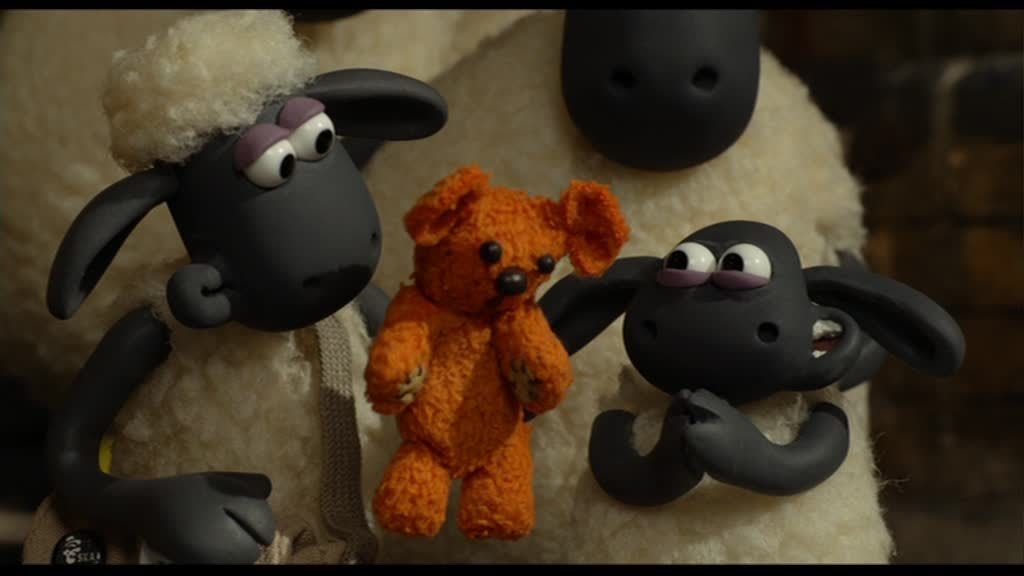
Age Recommendation: All ages
I recall after watching this film for the first time as a kid that me and my siblings immediately binged through episodes upon episodes of the TV show because of how much we loved the characters and the world they lived in. I remember the early mornings and late afternoons when the most important thing we could ever do was come together to watch a bunch of sheep and a dog go through conflicts, adventures, and ultimately come back together in the end. As one grows up, these are the moments in life that are reminisced the most as they seem farther and farther away.
Having just rewatched this film after not seeing it in quite some time, I was surprisingly made aware of this fact more vividly than expected. The film opens up with a nostalgic memory of Shaun and his friends as they play and goof around during their childhood. The feeling invoked reminds one of the comforts of a childhood home that once was. Such a feeling is quickly extinguished once the actual film begins back at the old “Mossy Bottom Farm” where things aren’t quite like they once appeared. Immediately the viewer is thrown into a monotonous sequence showcasing the dull rut that Shaun and his community are experiencing throughout their daily routine, which proves comparatively different to the energetic and goofy tone of the original sequence.
It was as if the childish world that Shaun knew (and subconsciously the viewer) was gradually being run down by the harsh reality of the world. The Farmer is ultimately blamed for this and is viewed as someone who could care less for Shaun and his friends well-being. Because of this, a plan is decided upon to rise against the farmer and put him away so that the sheep and animals of the farm can go back to playing and enjoying themselves without the burden of authority. This reaches its climax when the Farmer (who is now fast asleep in an old RV) accidentally rides off and injures himself in “Big City”, losing any memory of his farm animals.
While this might exactly like what the sheep would have wanted, they find it a harder reality to confront than they could have imagined. Without the farmer, they have lost someone who not only took care of them but through all of the rough times that he might have given the sheep, he was ultimately the true reason for their original safety and happiness which they no longer possess. With this, the sheep will go through thick and thin to find their farmer and bring him back home.
Such a plot is not new and has been done multiple times over the course of kids films and tv series with the same fun and light-hearted result. Yet where I believe the Shaun the Sheep movie really sets itself apart is both in its choice of comedic style and where it decides to focus on emotionally. It is commonplace nowadays to find non-verbal cartoons directed towards young children where the most entertainment provided consists of back to back potty jokes mixed with hidden adult humor. While this pattern certainly works and is expected by audiences now, Shaun the Sheep takes a step back to revisit the roots of slapstick and visual comedy. The film uses various visual comedy gags and cues that are reminiscent of older comedians such as Buster Keaton, while reminding me of more recent examples such as in the Paddington movies where the film plays around with expectations and stereotypes and turns them on their heads without feeling obnoxious and childish. Such comedic cues are set up not only for a temporary chuckle similar or smirk, but are used to stir up familiarity and empathy towards the characters as they reach the climax of both their journey and that of the grand emotional payoff.
This film is primarily focused on answering the question of “What does it truly means to return home?”. Does it simply mean to travel back to an old building? Is it just something you gradually lose in childhood and have to live without in adulthood? What makes a home? While watching the film slowly pull back the answer, I was reminded of another film which tackled the idea of losing and regaining one’s sense of home. During the climax of this particular film, a certain character named George Bailey receives a vision of what his life would be had he not been born and thus comes back to his life with a new appreciation for his life spent in that old home town. In both cases, the main protagonists lose their loving, yet underappreciated, home in order that they might gain it back with a new sense of warmth and belonging.
But where Shaun the Sheep achieves a special kind of emotional resonance, is within the lost character of the farmer representing that familiarity and safety. Shaun and his friends not only are away from their home, but they’re away from the love and protection of their farmer. This is the journey that is taken. Not so much a physical journey, but an emotional one to reconnect with both the past and the person that shared it with you. Such sets this film vastly apart from the amount of childhood films which have formed me in my youth as being one that I can watch over and over again without losing both the laughter and the heart. I would highly recommend it to any and all viewers no matter the age as a hilarious and heartfelt story about the importance of reconnecting and remembering the best of times and people in one’s life and to never forget it.
